
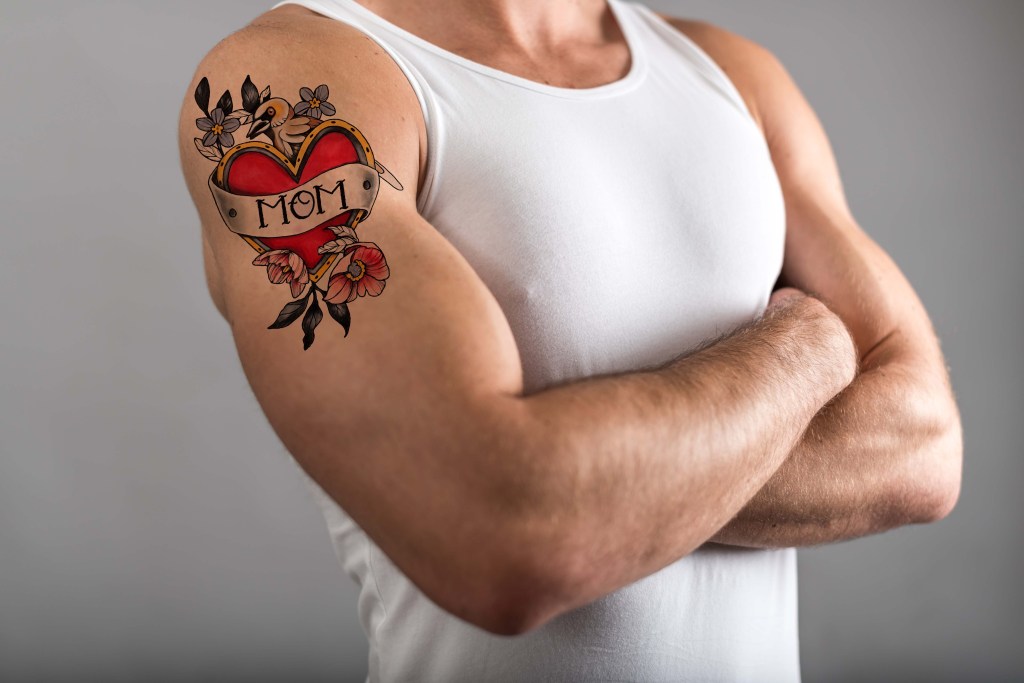
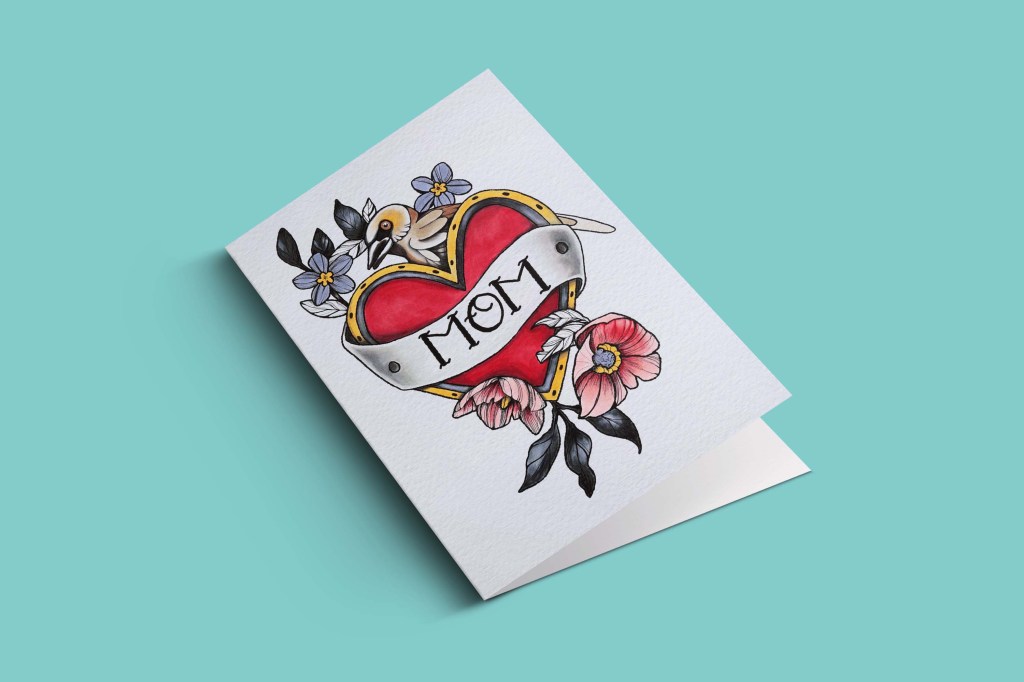
In this exercise, I will design a tattoo for a friend based on the word “Mum”. The friend would also like the illustration to be a greeting card to send to his mother. I am researching the history and conventions of tattoos and body art and the modern ranges, looking at the designs from the past and other cultures.
1. The earliest discovery of tattooing
Thirty years ago, Ötzi the Iceman’s naturally mummified remains were discovered by German hikers on 19 September 1991. (Pinkowski, 2021)
Naturally preserved and frozen for more than 5 000 years in a glacier. Scientists studied Ötzi’s body and found over 57 tattoos of dots, crosses, and small lines believed to be therapeutic tattoos or an early form of acupuncture.
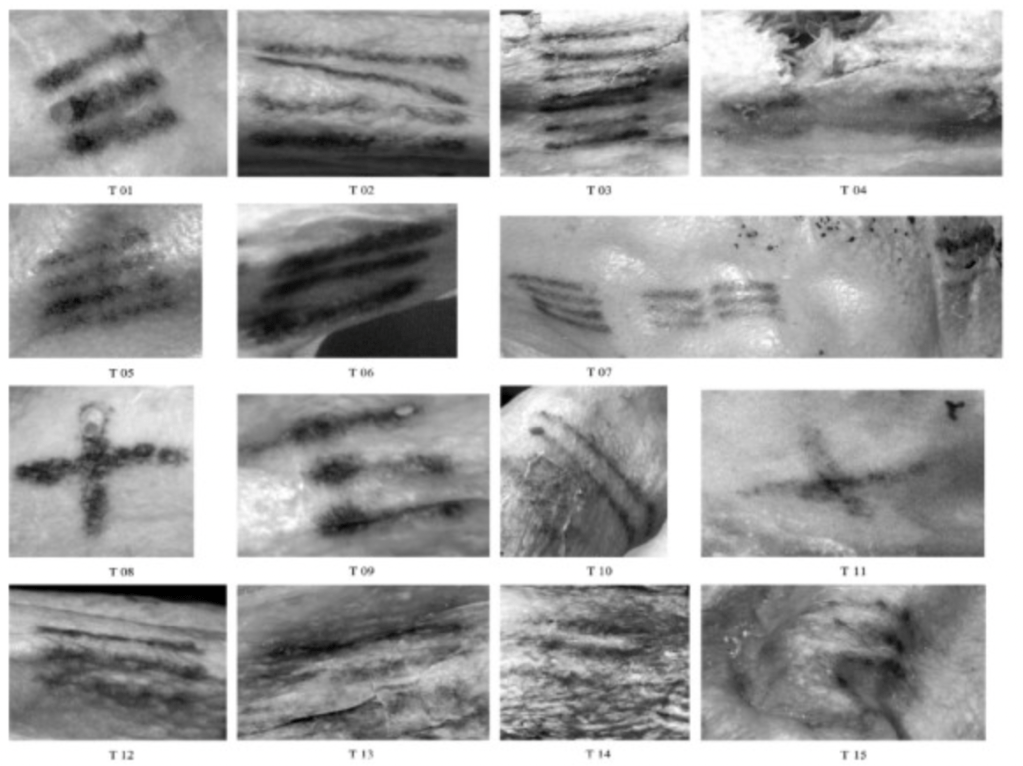
Archaeological tools from the late Stone Age suggest that tattooing has been practised in Europe for over 12 000 years. Around 2 800 BC in North Africa, the ancient Egyptians and Nubians popularised tattooing for the first time as an art form. (Wikipedia, 2022)
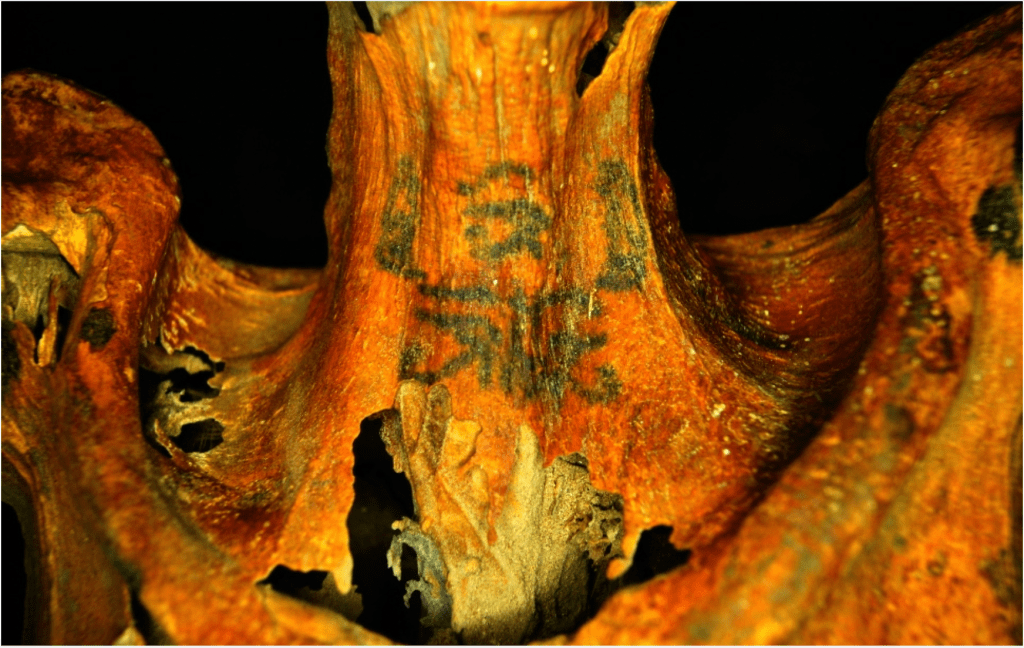
Mummies from this era had dots, lines and markings on their bodies, and it appears to have been practised almost exclusively on women. The most famous example is Priestess Amunet, whose body was adorned with tattoos, symbolising sexuality and fertility.
2. The word “tattoo.”
The word “tattoo” comes from the Polynesian word “tatau”. On the island of Tahiti, tattooing was prevalent, and most of the ancient Polynesian society was tattooed. People would wear intricate patterns on their bodies to reflect their identity, personality and status. Tribal tattooing is one of the oldest styles in the world, and Samoan tattooing has been practised for over 2 000 years and is still popular today. Tattooists used a comb tool, made from sharpened animal bones, to tap designs into the skin. These designs are primarily done in black ink and inspired modern blackwork today. (Wikipedia, 2022)
3. Tattoo styles
3.1. Blackwork style
Blackwork is a fairly broad term that applies to any tattoos done in only black ink but also describes a heavier, bold geometric style.
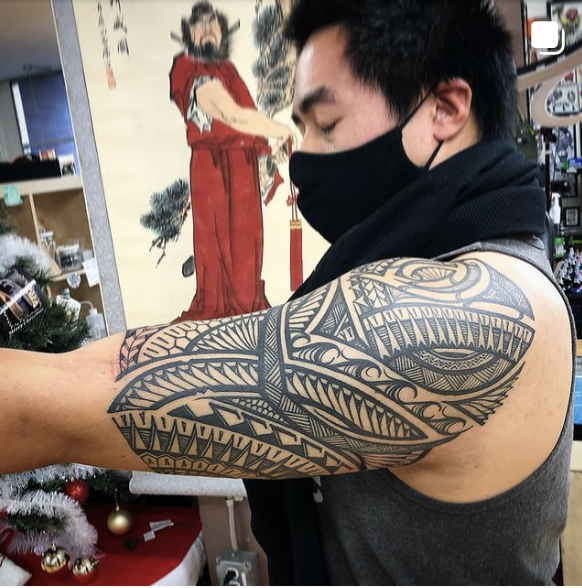
3.2. Tribal style
Tribal style is the umbrella term for indigenous body art and one of the oldest styles in the world. The elaborate patterns vary across the world depending on the culture.
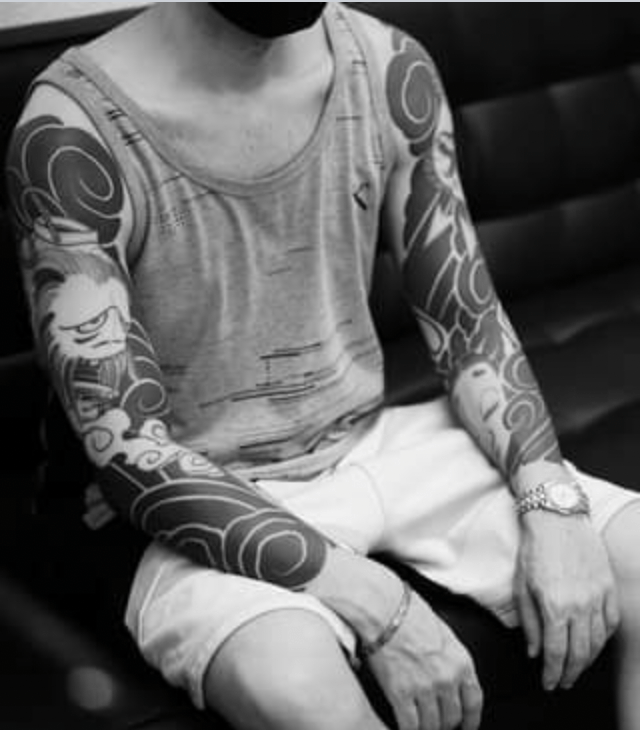
3.3. Japanese style
Tattoos became popular in Japan in the 1600s as part of the “Ukiyo” or floating world subculture. When the law passed stating only royals could wear ornate clothing, people decorated their skin with colourful, full-body tattoos instead of clothing. In 1868 the government banned tattooing altogether, deeming it barbaric and unrespectable. This ban led to a subculture of outcast people who could no longer integrate into normal society because of their visible tattoos. Many were forced into crime, forming the roots of the now-infamous “Yakuza”.
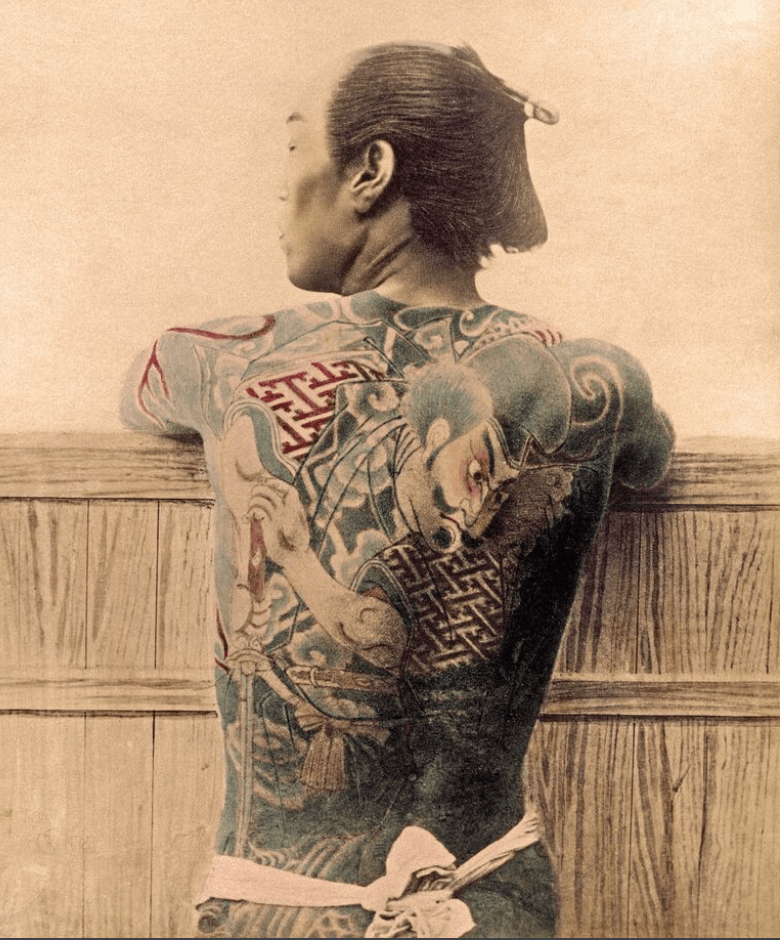
Four hundred years later, Japanese tattooing is still alive today with designs featuring colourful, dramatic depictions of mythological creatures, warriors, animals, waves and smoke. (Rose, 2021)
3.4. Traditional style
With a tattooist on almost every British port by the 1900s, sailors used tattoos to express themselves with designs representing their life experiences.
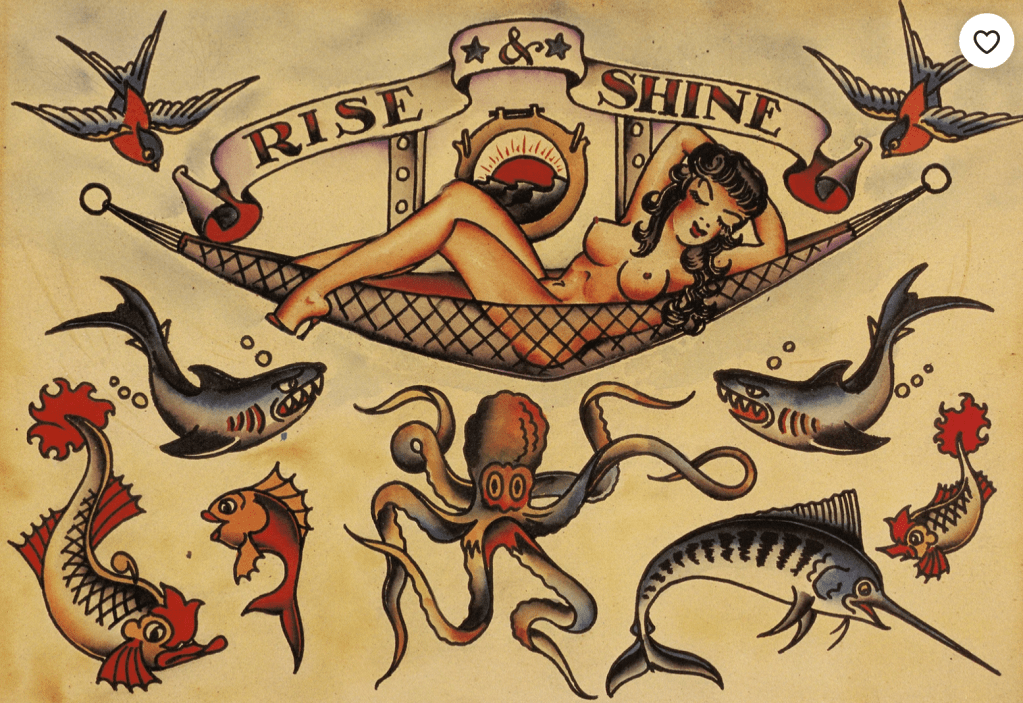
Tattoos were common among soldiers, sailors, bikers and convicts, who inscribed their bodies with imagery, stating their beliefs and affiliations. This gave birth to the Traditional style, which has since become one of the most famous styles of tattooing known for its bold lines, bright colours and iconic designs, which would feature ladies, roses, anchors and decorative lettering.
3.5. Neo-traditional style
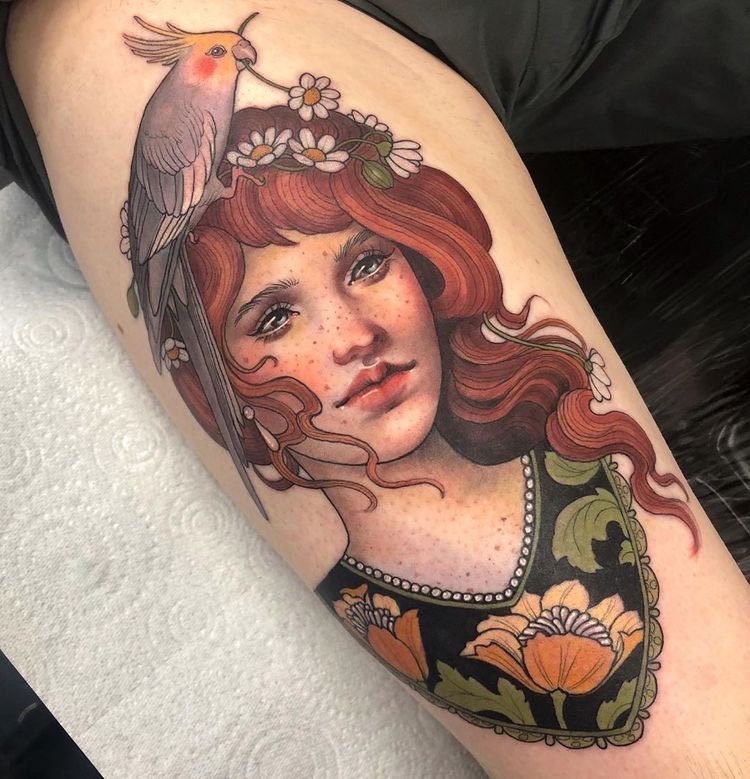
Neo-traditional is an evolution of the Traditional style featuring a broader colour palette and intricate details, heavily inspired by Art Nouveau and Art Deco aesthetics.
3.6. Chicano style
By the 1960s, tattoos became popular behind bars, with convicts using the few materials they had to create designs based on the things they loved and missed from the outside world. This became known as the Chicano style, which featured fine line, black and grey tattoos, steeped in the history of Mexican- American culture. Designs featured decorative lettering, beautiful women, scenes from gang life and Catholic iconography. By the 70s and 80s, this style of tattooing was widespread in Los Angeles.

3.7. Realism style
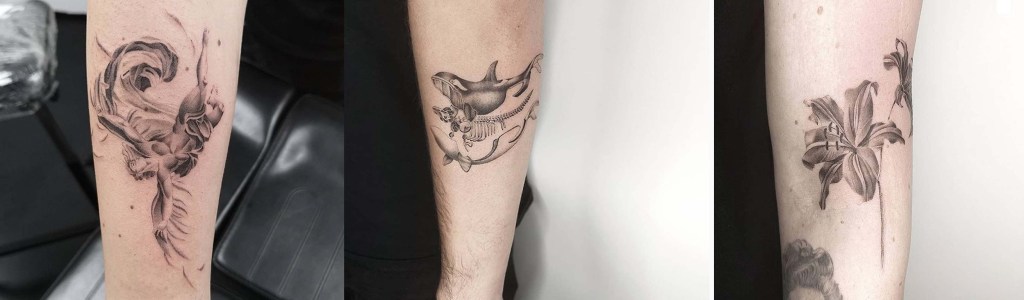
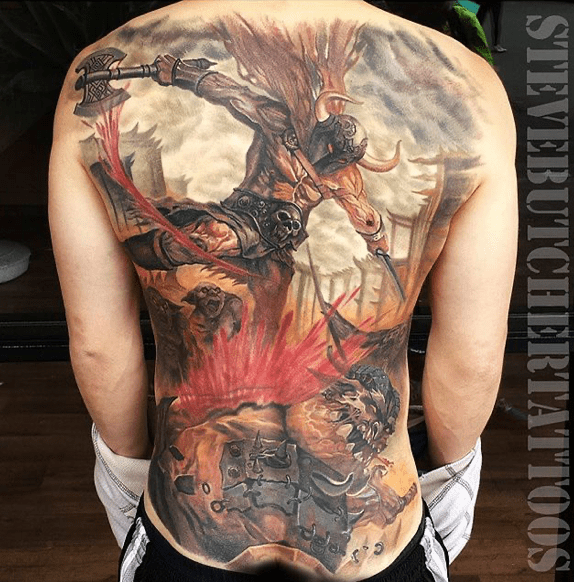
The realism style has been popular for the last 20 years and is most common today. Over time it has become more refined and has evolved into a very accurate depiction of celebrities, animals, nature and scenes from urban life in black, grey and full colour.
3.8. Watercolour style
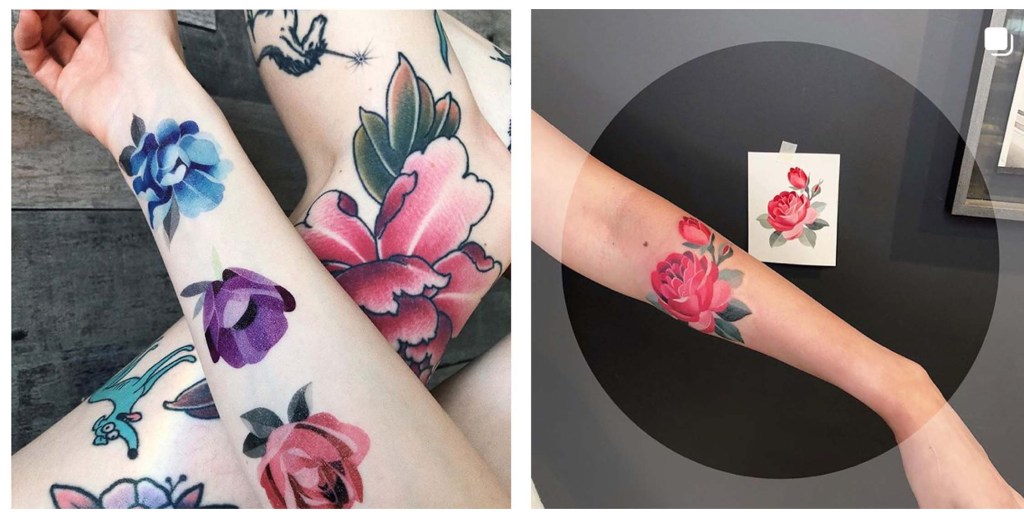
The watercolour style is new to the tattoo world and features a wide range of pastel colours. Designs are primarily expressed and made up of watery brushstrokes.
3.9. Fine Line style
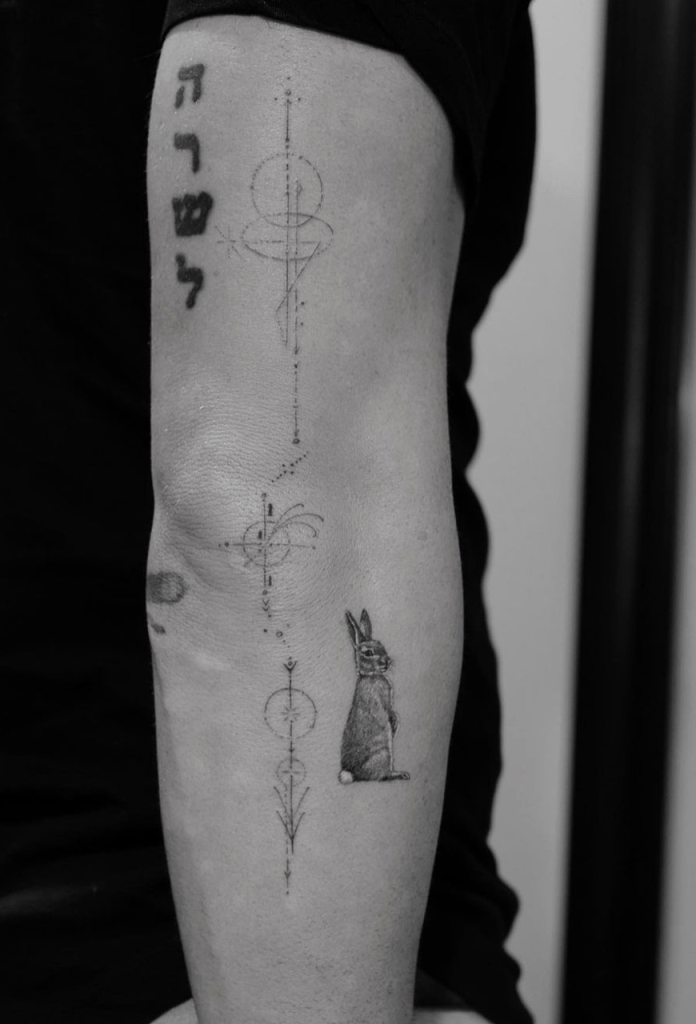
The Fine Line or “single needle” style features core characteristics of other tattoo styles, such as Chicano or Realism, but uses much thinner lines. It is a modern tattoo and has become increasingly popular due to its sensitive nature and detailed designs.
4. The process or technique of tattooing
I watched videos by Illustrator and Tattoo Artist, Ella Rose, to understand the modern tattooing technique. The pigment is inserted into the skin dermis with a rotary tattoo machine, and a needle set up with disposable tattoo cartridges depending on the desired size and shading.
When creating a design optimised for tattooing, it is important to take into consideration that over time the ink will disperse slightly into the dermis, the deepest layer of skin. You want the tattoo to still look good in five to twenty years. If lines are too close together, they end up blurring together, and you can lose a lot of detail over time. A simpler image will ensure that you will still have a beautiful tattoo over time.
5. Creating a tattoo design
5.1. Spider diagram
I utilised a spider diagram to brainstorm and write down all the ideas that came to mind. I have considered the different styles and that it will be a tattoo with the word “mum”.
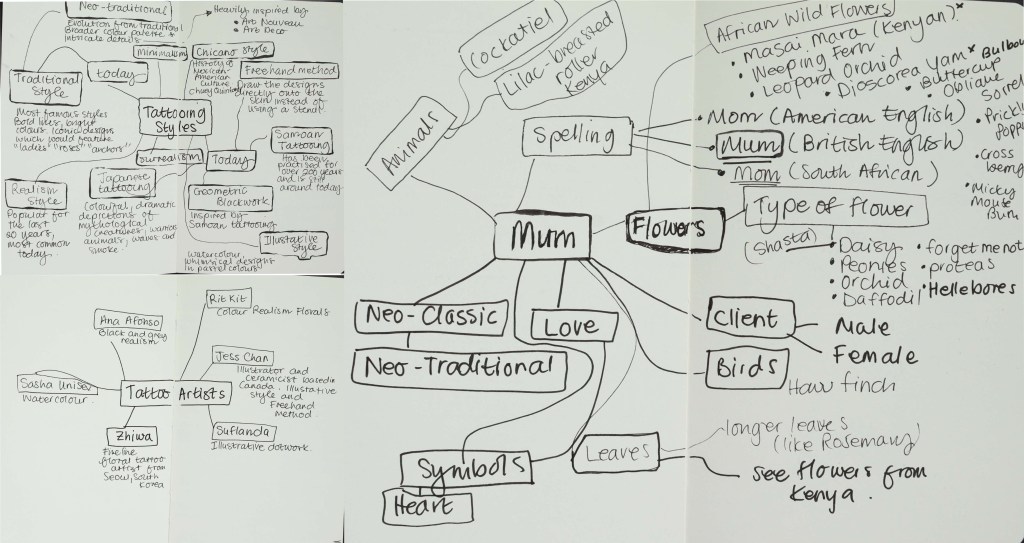
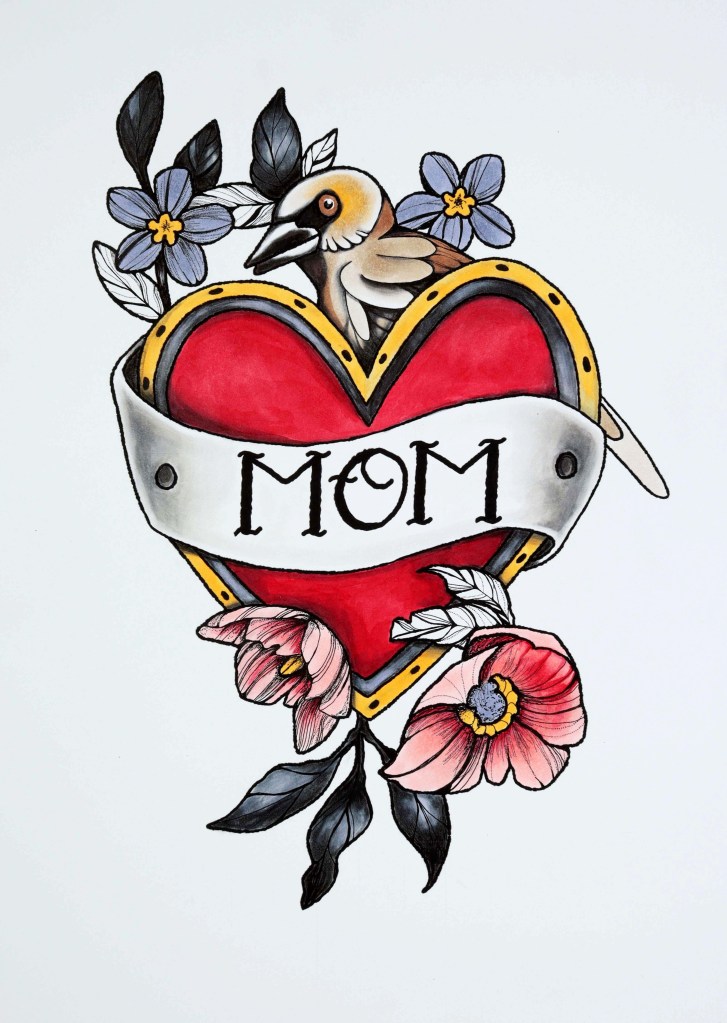
The Neo-traditional style will be the most fitting to illustrate the word “mum”. I have decided to go with the South African spelling “mom” and quite like the idea of using animals, flowers, and a symbol together in a composition. I explored different options.
5.2. Moodboards
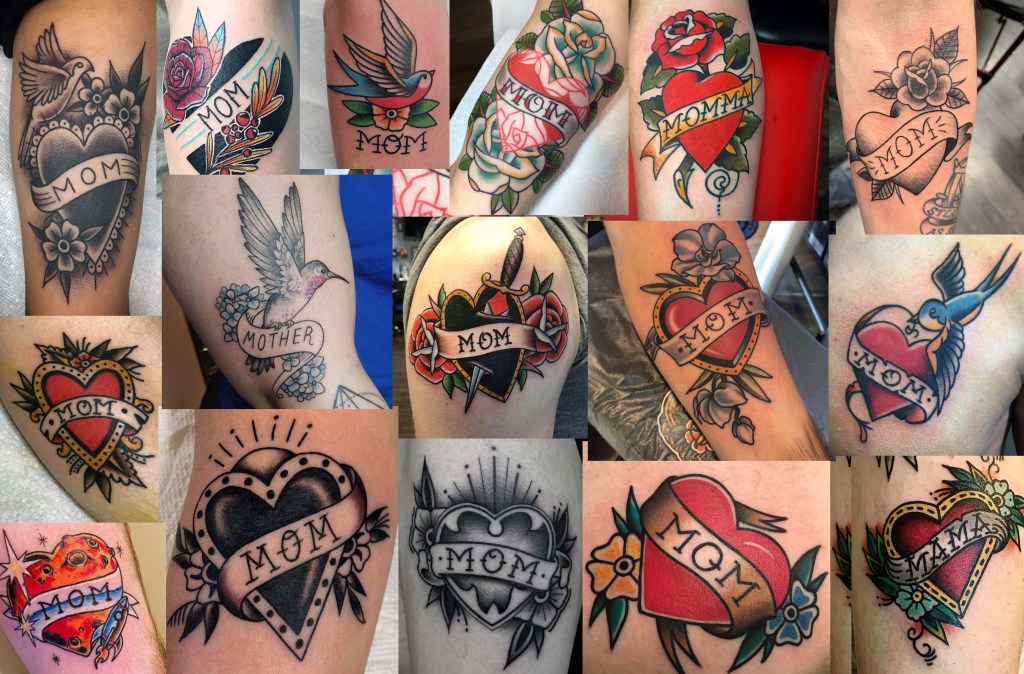
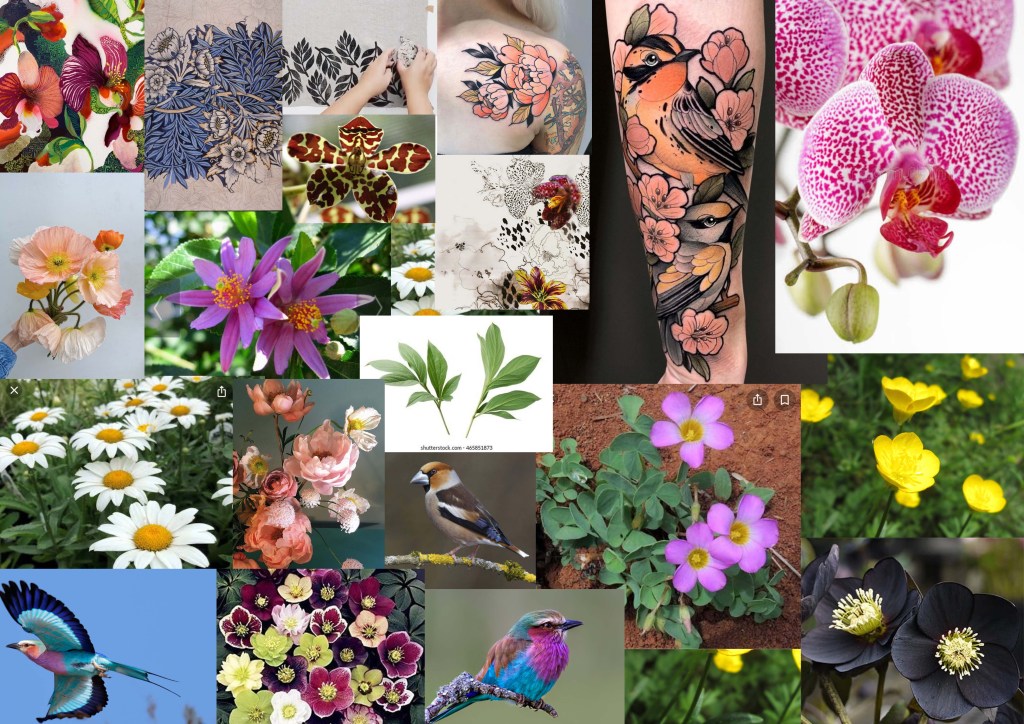
I then created two moodboards to generate ideas and feel of the project. I looked at different mum tattoos to explore the typography, layout, line weight and colour palettes.
5.3. Sketchbook
I sketched a few sketches to try out composition, scale and how my ideas translate to paper.
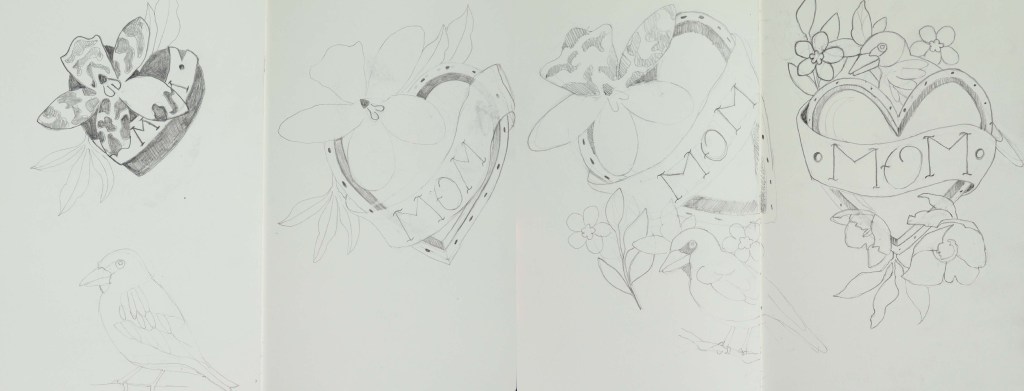
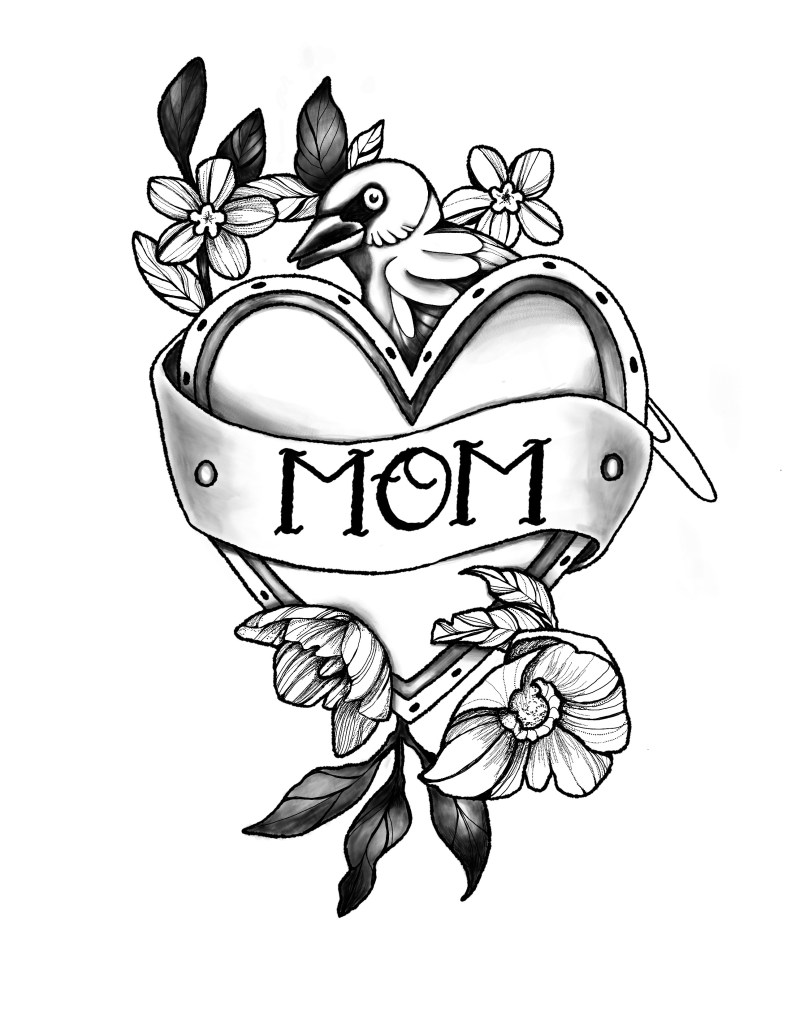
Once I had the composition and layout down on paper, I scanned the pencil sketch into Photoshop and created a black outline with a special “dotted” brush designed to give the same stroke as a tattoo machine.
5.4. Finished illustration and mockups
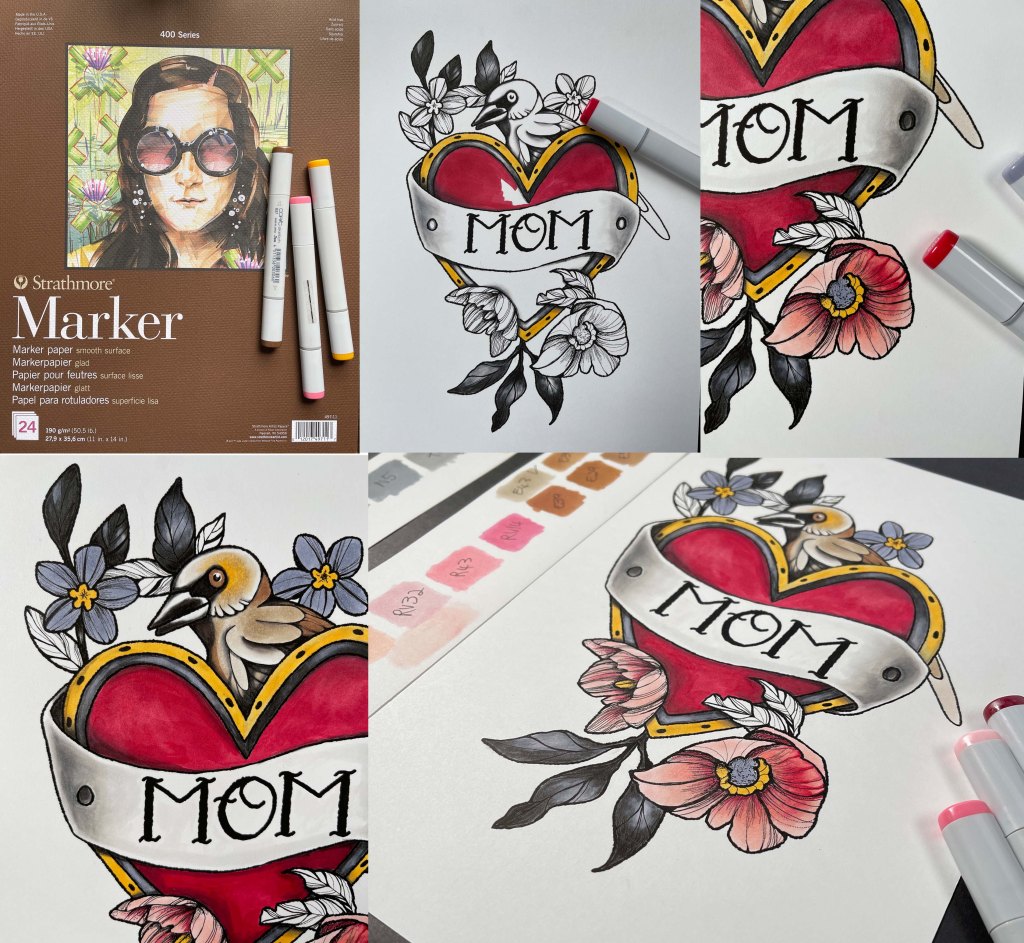
I then printed the outline sketch onto Strathmore Marker paper. I tested a variety of Copic alcohol markers on a separate paper until I had my colour palette. The Strathmore Marker paper is off-white and gives the illustration a traditional feel. The Copic markers blended well onto the paper, and I find the Copic markers vibrant with lively colours.Once I completed the illustration, I scanned it into Adobe Illustrator and did an image trace to create a PNG photo with a transparent background for a tattoo- and card mockups.
It is fascinating to discover the world of tattoo art, which is rich in history. I now grasp the different styles of tattooing and have a better understanding of the art form. I especially like the Neo-traditional style and think this style can influence my illustration style for future projects.
Works Cited
Pinkowski, J., 2021. National Geographic. [Online]
Available at: https://www.nationalgeographic.com/history/article/tzi-the-iceman-what-we-know-30-years-after-his-discovery
[Accessed 7 February 2022].
Wikipedia, 2022. Wikipedia. [Online]
Available at: https://en.wikipedia.org/wiki/Tattoo
[Accessed 7 Feb 2022].
Wikipedia, 2022. Wikipedia. [Online]
Available at: https://en.wikipedia.org/wiki/History_of_tattooing
[Accessed 7 February 2022].
Rose, E., 2021. Domestika. [Online]
Available at: https://www.domestika.org/en/courses/2494-introduction-to-tattooing/course
[Accessed 7 Feb 2022].
 Peachy Brushes