
The Brief
There are three tasks for your final exercise. Take a single image from any point in your sketchbook so far and duplicate the image three times, on a new page using a pencil. Next, alter two of the images by rubbing out and redrawing elements to create a beginning, middle and end-sequence. This could be as simple as choosing a scene where an apple falls from a tree, or a person walks across the page. The important thing to consider is how you alter the image to reflect these different phases of the sequence.
Take the same, or another drawing from your sketchbook and repeat the same task. This time when creating your beginning, middle and end, change the passage of time across three images to a different unit of time. If you drew something in ‘real time’ you might want to try imagining the same scene changing over hours, days, seasons, centuries or from prehistoric age to now.
Finally, imagine a different possibility for the shape and form of one of your earlier drawings by morphing it into a changed shape, using series of drawings to get there. Could an object take on a human form? A flower or plant unfurls and completes a life cycle. A blob changes shape depending on how it interacts with other objects or the frame of your image.
Create a beginning, middle and end-sequence.
I will create a beginning, middle, and end sequence using a sketchbook drawing of three jars of peanut butter.

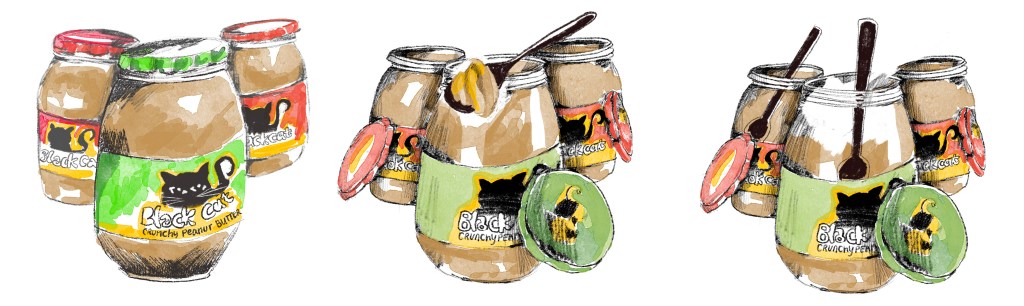
Making digital sketches in Procreate (Figure 2), I started with the original sketch, which is the beginning, and then continued by opening every jar and taking a spoonful of peanut butter. This is the middle. The end (far right) is a half-full jar of peanut butter with the spoons standing upright in the jars.
Looking back and reflecting on these sketches, I don’t think the message of the half-full jar (the end-sequence) is coming across clearly. I could change the position of the lids in the ‘end’ picture and move the jars around across the sequence so they are not in the same position in every frame. Moving the jars around will also add to the narrative that they have been handled by human hands. It would be nice to show one of the jars lying on its side, showing the emptiness of the jar to the viewer.
Changing the passage of time
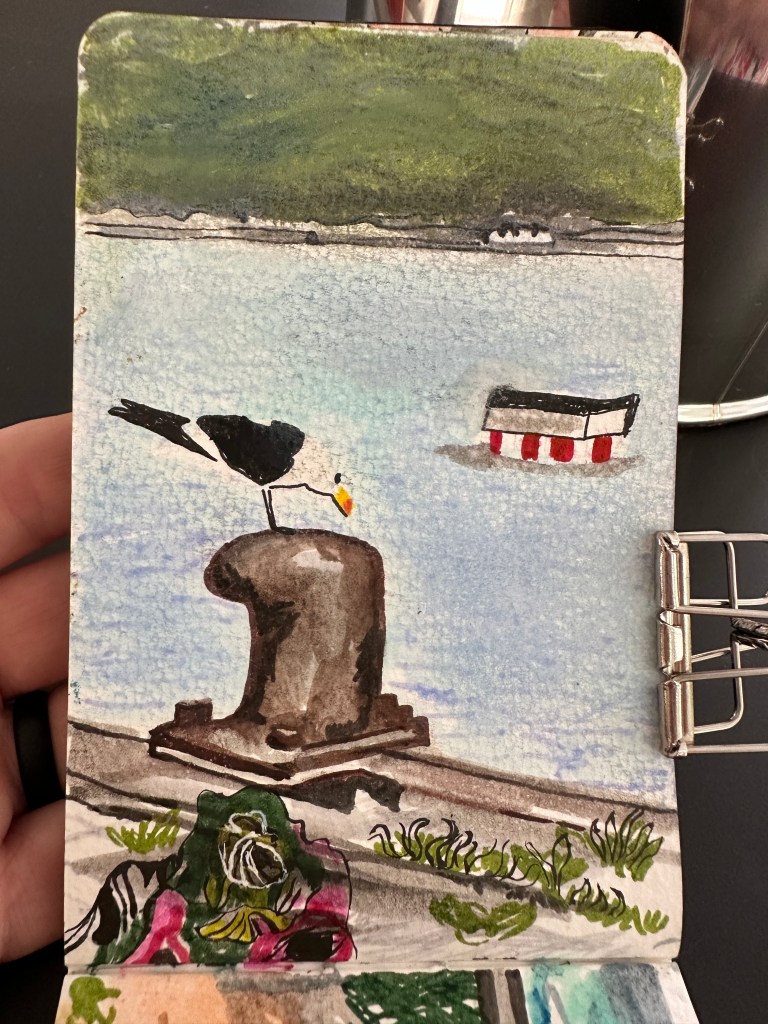
I am using a sketch from one of my routes when I went out to sketch.
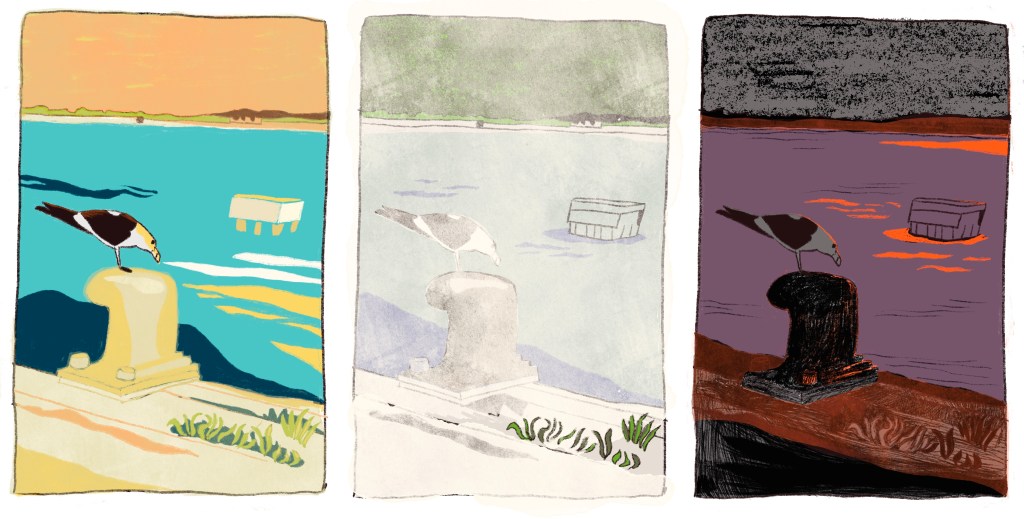
In Figure 4 I am changing the passage of time by starting with a scene at sunrise. The weather then changes to a misty afternoon (middle) and on the right is sunset. I am happy with how the sketches came out, and I think I have captured the time of day accurately by considering the position of the sun, colours and textures. I do, however, think I could change things around more; for instance, the seagull can soak up the sun when the sun rises by opening his wings, and maybe in the misty scene, the seagull can puff himself up like birds do to keep himself warm. He could also, for instance, sit on the ground cuddled up against the mooring. The sea can change. Maybe in the misty scene, it can be high tide with more waves. The buoy floating in the water would also be moving slightly depending on the tide.
I will keep this in mind when continuing with sequencing further in this unit.
Morphing an object into a changed shape
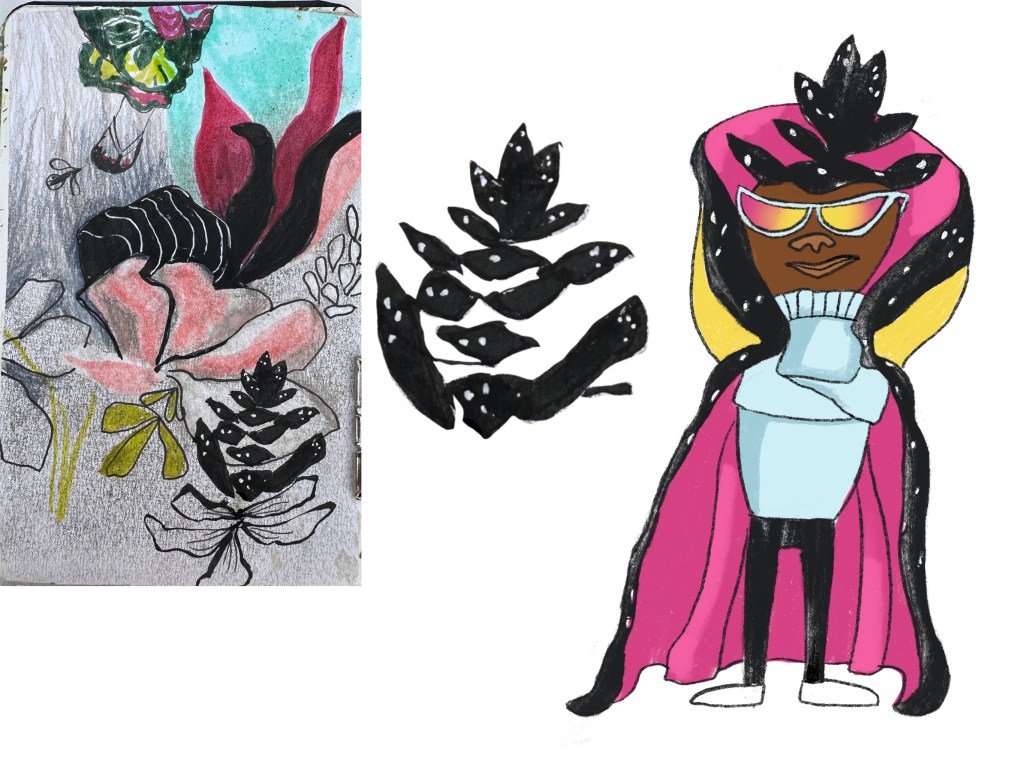
Using another drawing from my sketchbook, I recognised shapes that could morph into something else.
In Figure 5 I am changing the original plant shape into a character by using the outlines to inform the shape of the character. I tried to preserve the patterns and outline of the plant as much as possible. This is an excellent way to come up with new ideas.
In Figure 6 I have changed the same plant into a fish by turning it sideways. I also morphed the kelp into a hanging lamp.
It is clear to me that by using this method to obtain new ideas from your sketchbooks, you will never run out of ideas.

Next time, I will have a better idea of how to approach this exercise. I think it is important to consider all the ‘moving elements’ and how they can add to the narrative.
 Peachy Brushes